Things to Do in Dubai, UAE
The City of the Future — Desert, Skyscrapers, and Boundless Ambition
- Average daily budget
- $120–$350/day
- Currency
- UAE Dirham (AED)
- Language
- Arabic / English widely spoken
- Best for
- Luxury, Shopping, Desert, Architecture
About Dubai
Dubai is the world's most audacious city — a place that has transformed from a fishing village into a global metropolis of 3 million people in just 50 years, and shows no signs of slowing down. The Burj Khalifa pierces the clouds at 828 meters; artificial islands shaped like palm trees extend into the Arabian Gulf; indoor ski slopes sit inside shopping malls; and the world's greatest collection of luxury hotels competes for the superlative. But beneath the spectacle, Old Dubai's Creek, the spice souks of Deira, and the wind-tower neighborhoods of Al Fahidi reveal a more layered, complex city with deep Arabian roots.
Top Attractions in Dubai
Burj Khalifa
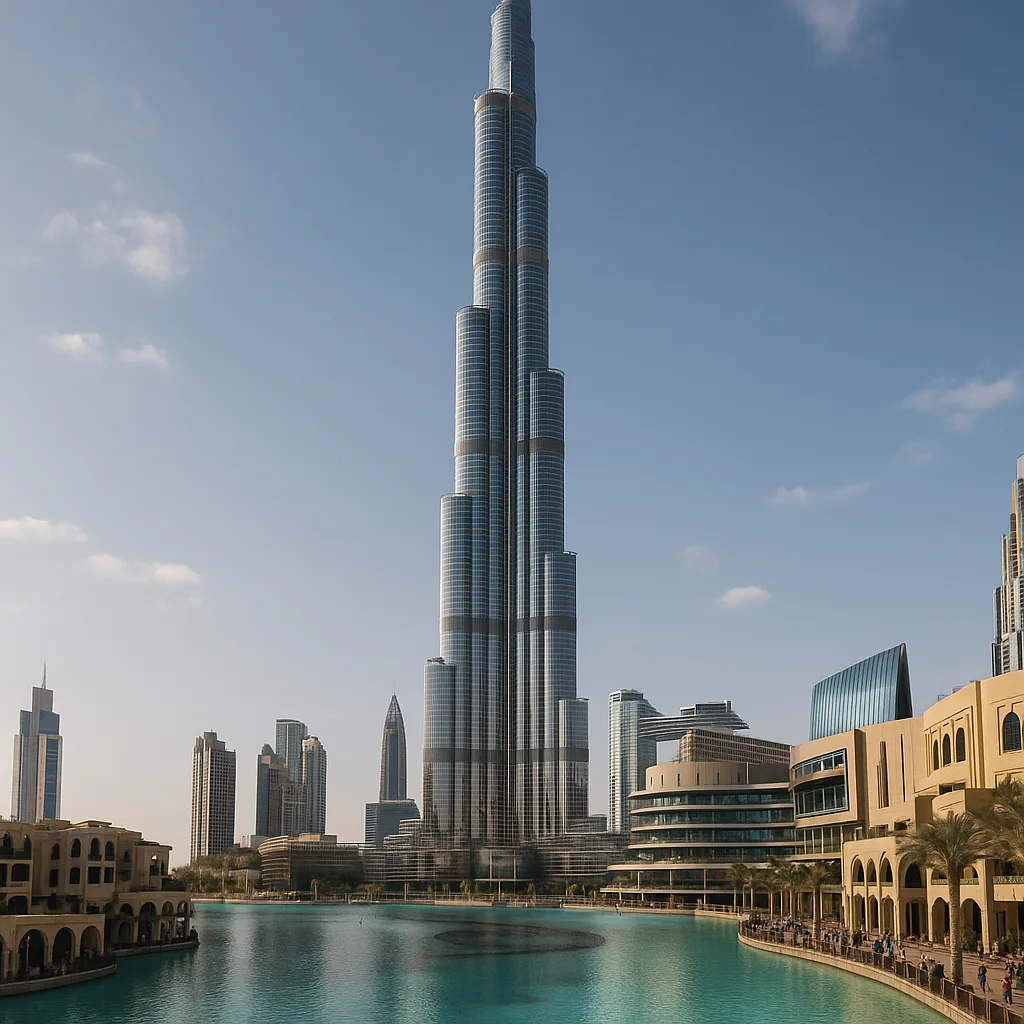
The world's tallest building at 828 meters has observation decks on floors 124, 125, and 148 — At the Top SKY offers views across the desert, the Arabian Gulf, and (on clear days) into neighboring countries. Book tickets online in advance.
Dubai Mall & Dubai Fountain
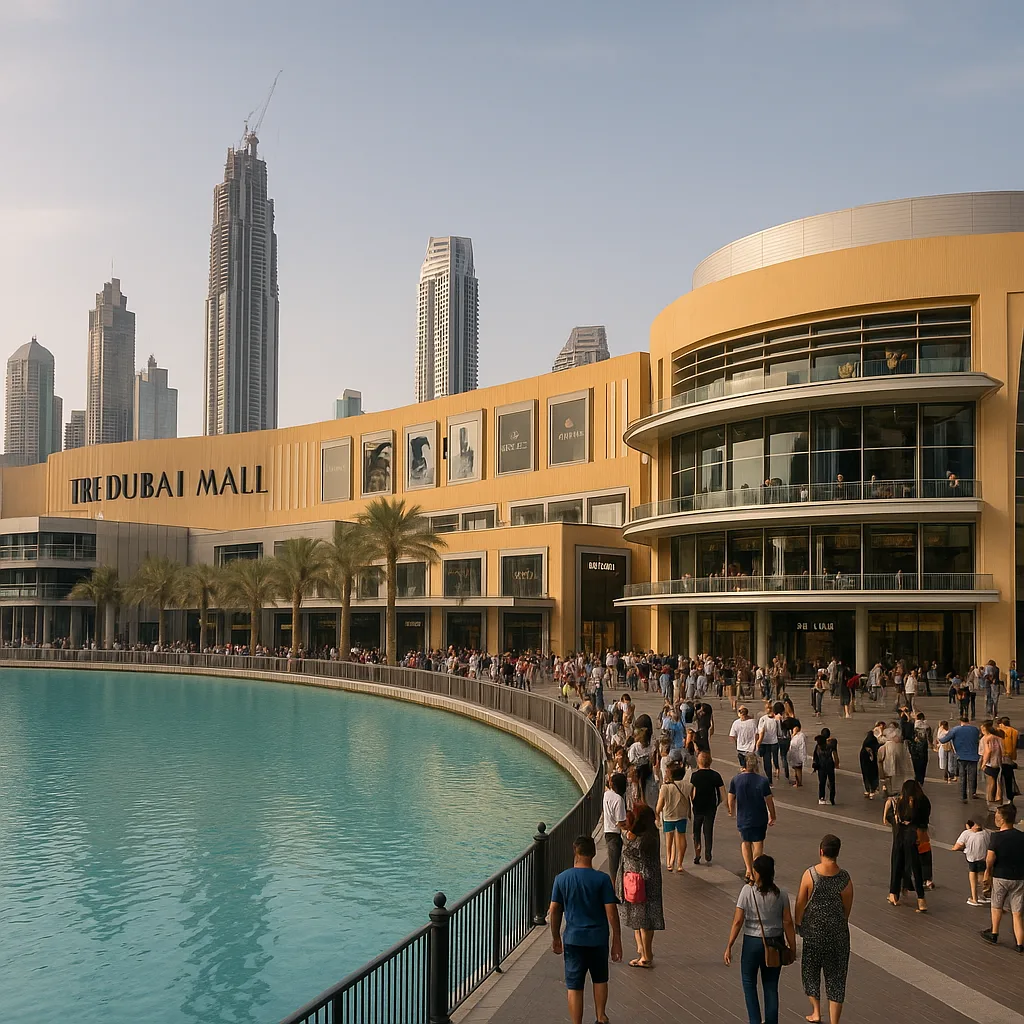
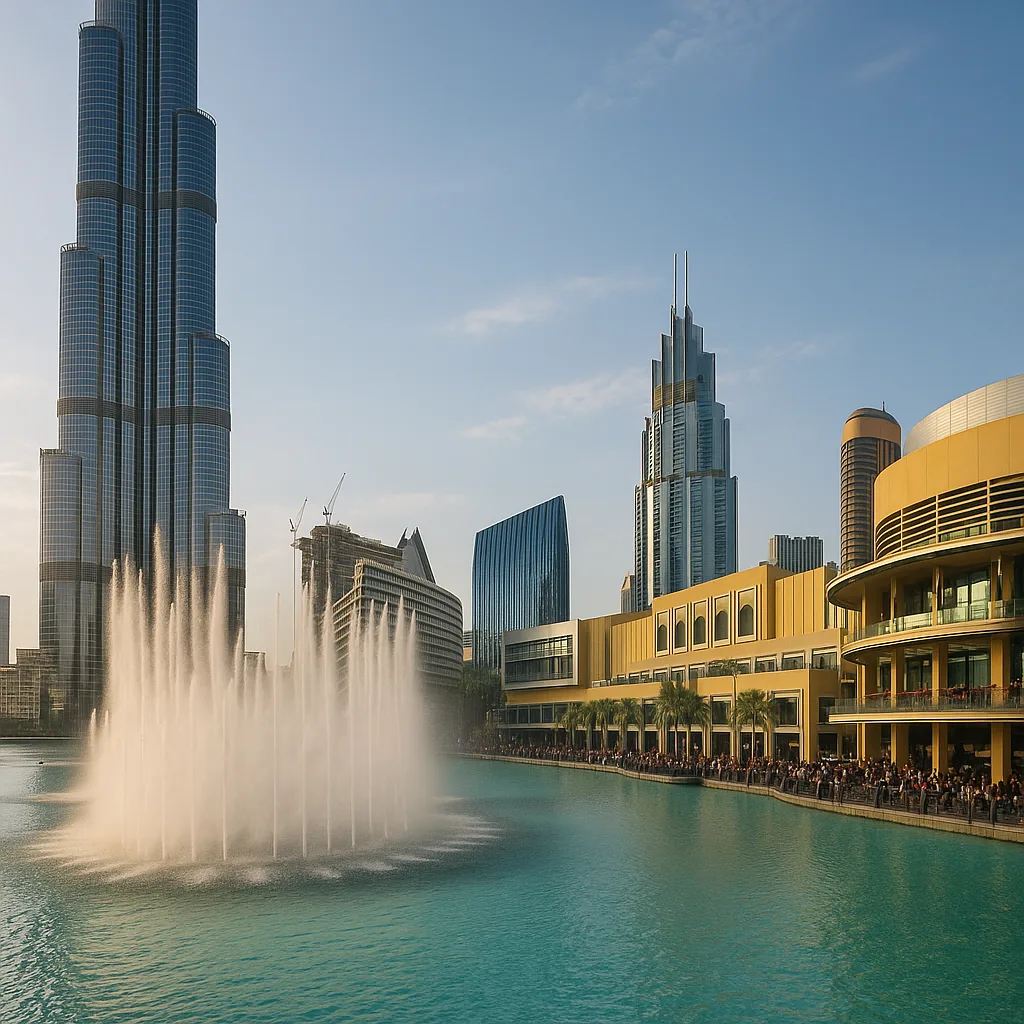
The world's largest mall (by total area) contains an Olympic ice rink, a shark tank aquarium, and over 1,200 shops. The Dubai Fountain outside performs a choreographed water-and-light show every evening to music.
Desert Safari
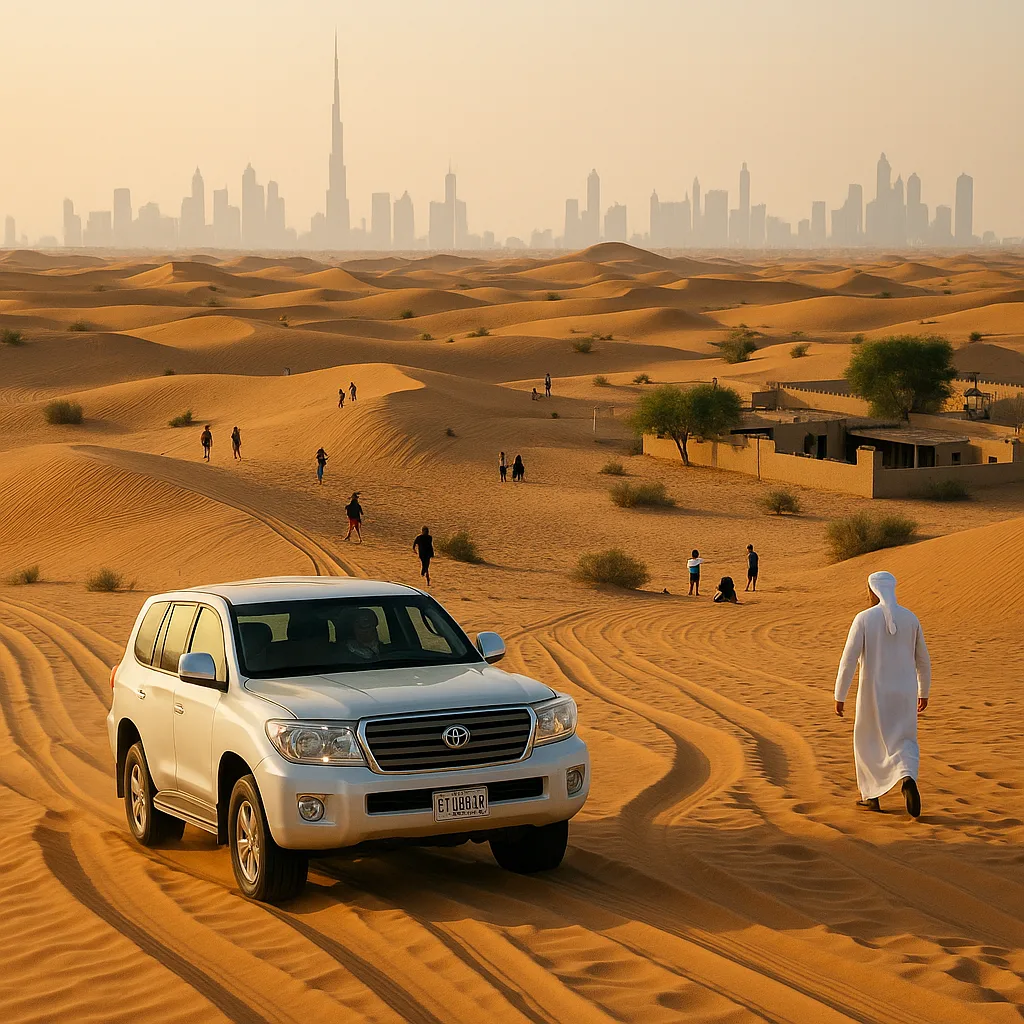
A quintessential Dubai experience: a 4WD dune-bashing ride into the red dunes of the Arabian Desert, camel riding, sandboarding, and an evening Bedouin camp dinner with belly dancing and falconry displays.
Al Fahidi Historical Neighbourhood
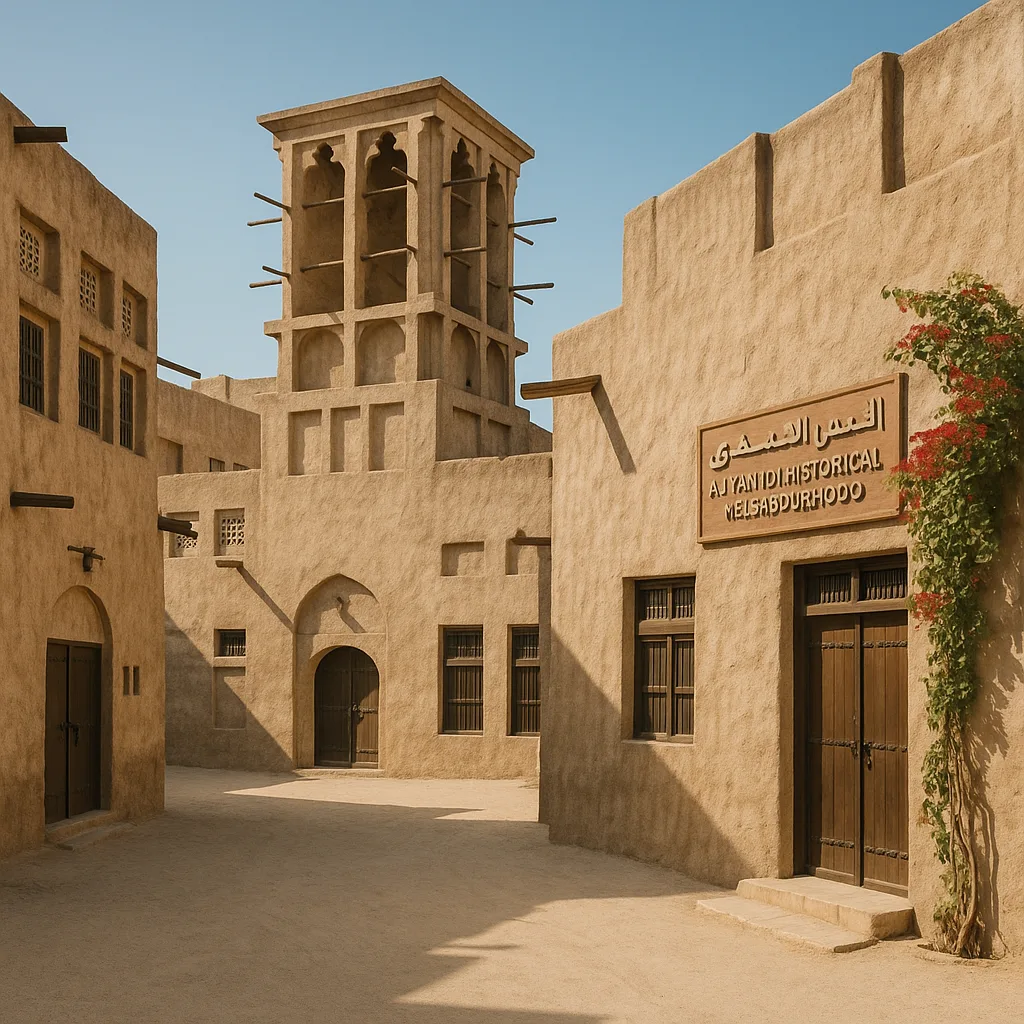
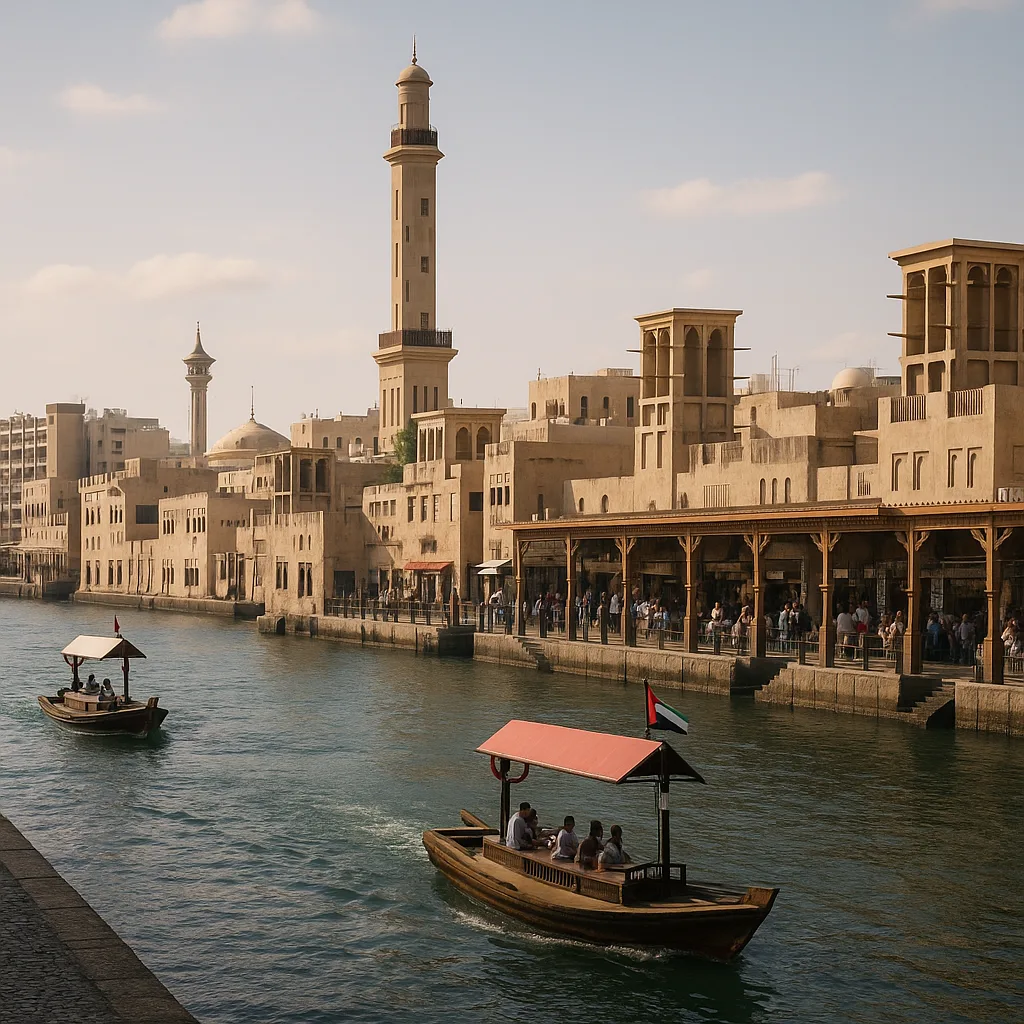
The wind-tower architecture of Old Dubai's most preserved quarter stands in dramatic contrast to the gleaming towers across the Creek. Art galleries, the Coffee Museum and excellent cafés cluster here, and the Al Shindagha Museum along the Creek has taken over from the Dubai Museum in Al Fahidi Fort, which has been closed for renovation since 2019.
Palm Jumeirah
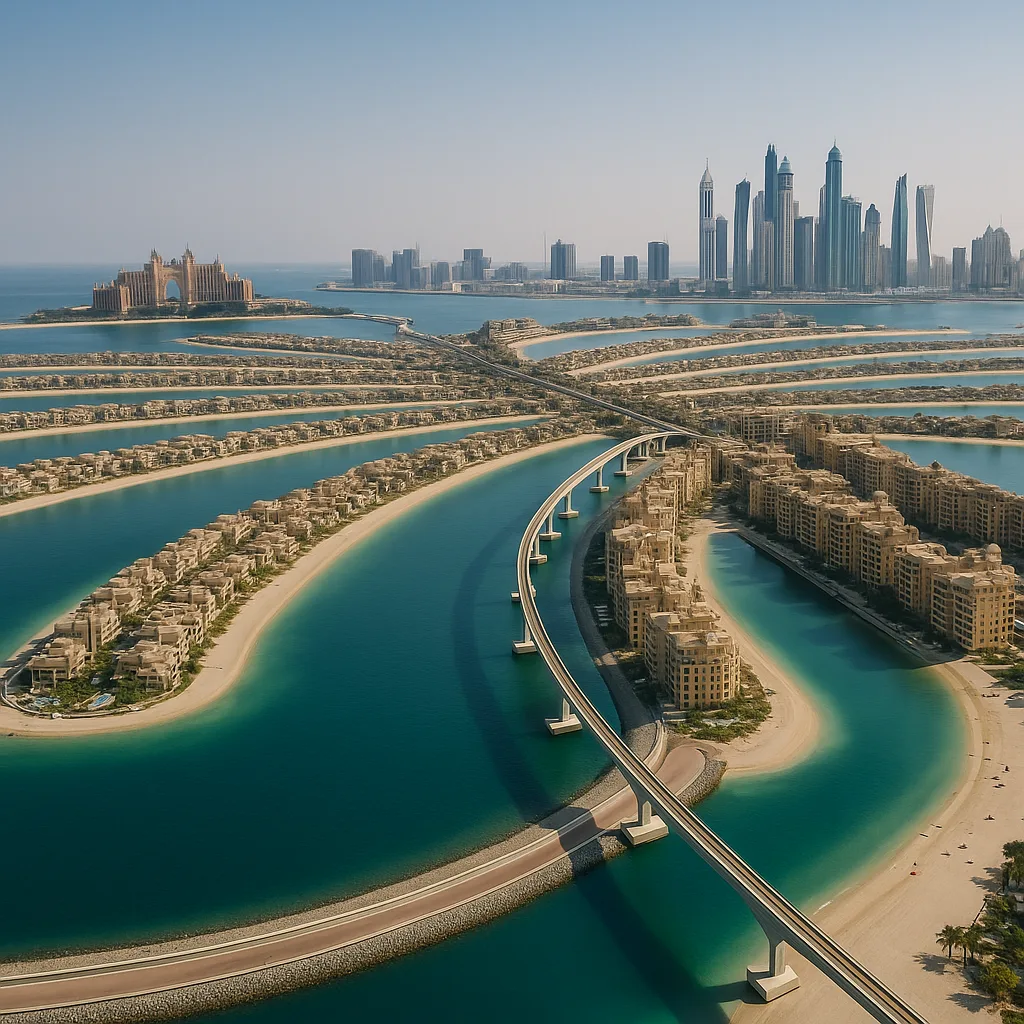
The artificial palm-shaped island is home to Atlantis resort, The Pointe dining district, and the world's only 7-star hotel, Burj Al Arab (worth a visit for afternoon tea even as a non-guest).
Dubai Creek & Spice Souk
Cross the creek on a traditional abra (water taxi) for just 1 AED, explore the Deira Spice Souk and Gold Souk — 300 shops selling some of the world's cheapest gold jewelry — and feel old Arabia.
Best Neighborhoods in Dubai
Downtown Dubai
The modern heart of the city where the Burj Khalifa, Dubai Mall, and Dubai Fountain create one of the world's most spectacular urban squares.
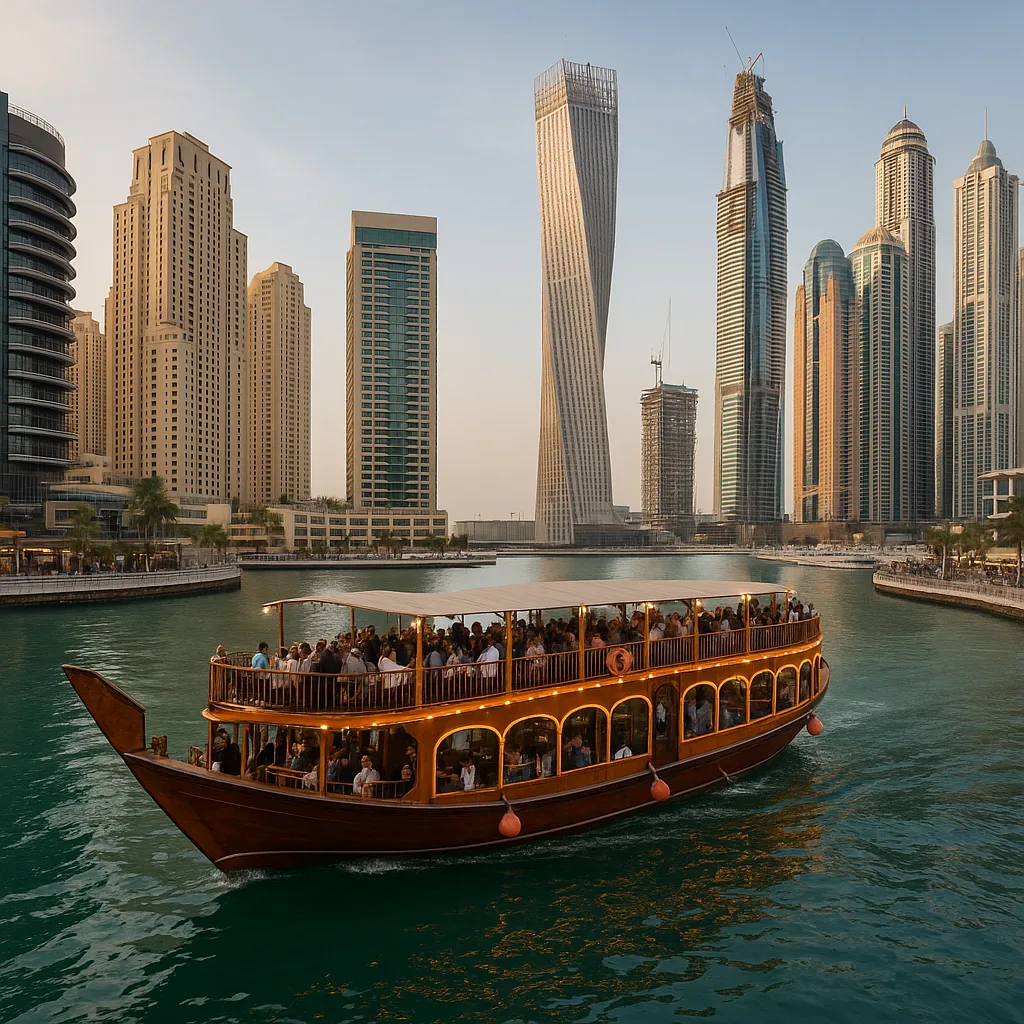
Dubai Marina
A man-made marina lined with skyscrapers, yacht clubs, beach clubs, and a pedestrian promenade packed with restaurants and bars — Dubai's most liveable modern neighborhood.
Jumeirah
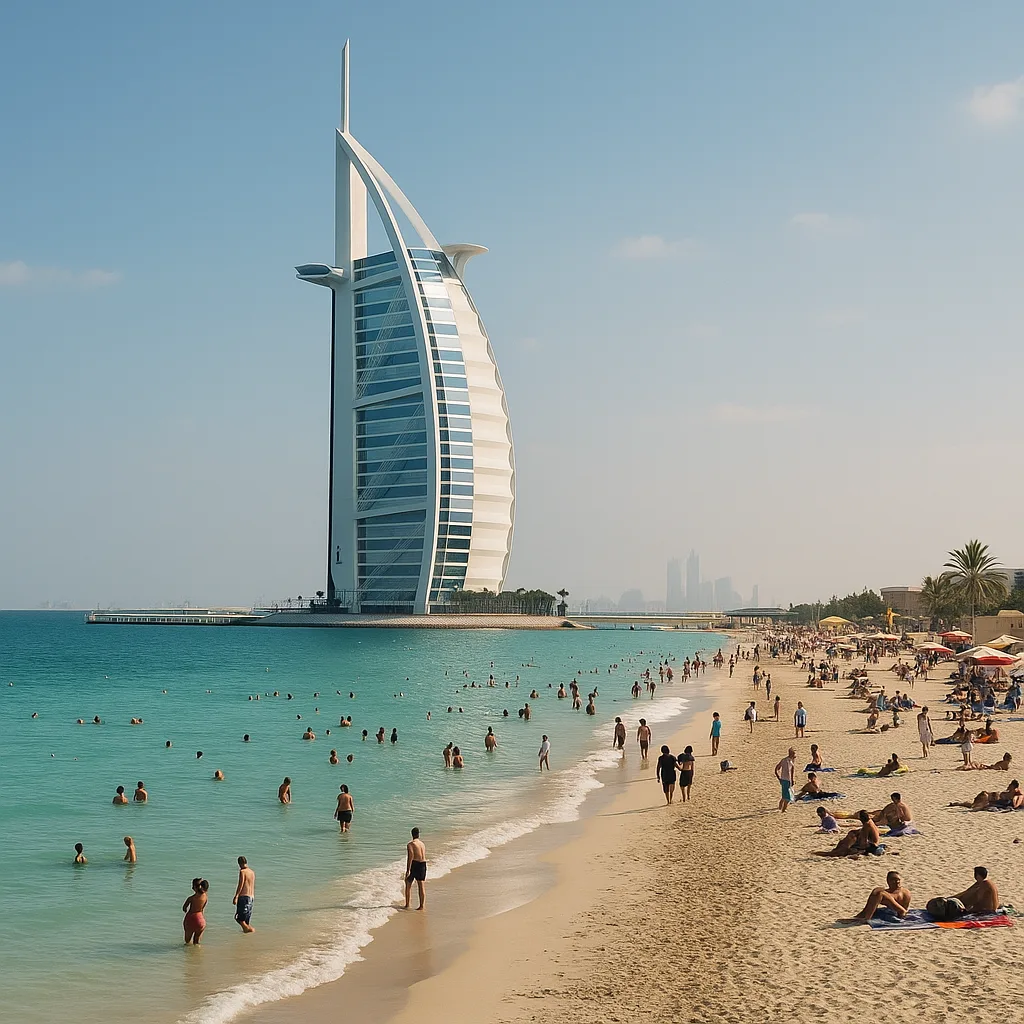
The upscale beach neighborhood has the iconic Burj Al Arab, excellent brunch restaurants, and Kite Beach — Dubai's most vibrant public beach with volleyball, food trucks, and a kitesurfing scene.
What to Eat in Dubai
- Al harees (slow-cooked wheat and meat porridge) at an Emirati restaurant
- Shawarma from a local Al Mallah or Ravi Restaurant
- Mezze platter at a Lebanese restaurant in Deira
- Friday brunch at a five-star hotel (an extraordinary Dubai tradition)
- Luqaimat (date syrup doughnuts) from a street stand
- Camel milk ice cream from the Dubai Mall's camel milk café
Best Time to Visit Dubai
November through March offers the best outdoor weather — warm (22–28°C) with blue skies. April and October are transition months. May through September is extremely hot (40–50°C) with oppressive humidity — outdoor activities are limited, but hotel prices plummet and indoor attractions are fully enjoyable.
Getting to and Around Dubai
Dubai International (DXB) is 5 km from Deira and 15 minutes from Downtown: the Red Line metro runs from Terminals 1 and 3 to Burj Khalifa/Dubai Mall in about 25 minutes and to Dubai Marina in 50 for around AED 4–9 with a Nol card (a Silver card is AED 25 including AED 19 of credit, sold at every station), while a taxi from the rank is AED 50–70 to Downtown and AED 90–120 to the Marina, including the AED 25 airport pickup fee. Al Maktoum (DWC), 60 km southwest, is a AED 120–180 taxi to the Marina. The metro is spotless, air-conditioned and fast, with the Red Line following Sheikh Zayed Road past every major tower and the Green Line looping through Deira and Bur Dubai to Al Fahidi; the Gold class carriage costs double, and one carriage is reserved for women and children. Trains run until midnight, later on Thursday and Friday nights. The Dubai Tram links the Marina to JBR and to the Palm monorail (AED 20 return), and the RTA abras cross the Creek for AED 1–2. Taxis are metered, plentiful and inexpensive by Western standards (AED 12 flag fall, roughly AED 2 a kilometre; Downtown to the Marina AED 60–80); Careem and Uber cost slightly more. Walking between attractions is only realistic from November to March, and even then Sheikh Zayed Road can be crossed only at the metro-station footbridges. Rental cars are cheap (AED 100–150 a day) with Salik toll gates at AED 4–6 each, and the desert-safari operators collect from every hotel. Friday mornings are quiet, and Ramadan hours cut daytime restaurant service.
Where to Stay in Dubai
Downtown Dubai is the first-timer's base, with the Burj Khalifa, Dubai Mall and the fountains on foot: the Address and Vida hotels run AED 900–1,800 (roughly $250–$500) a night from November to March, and the Dubai Mall metro station connects to everything. Dubai Marina and JBR are the beach-and-nightlife choice, with a walkable promenade, the tram and hotels at AED 600–1,500 for a sea view; the beach is free and public. Jumeirah's beach resorts (Jumeirah Beach Hotel, the Madinat complex, the Burj Al Arab from AED 6,000) and the Palm Jumeirah's Atlantis and One&Only (AED 1,500–4,000) are for people who intend to spend their days by a pool, and both are taxi-dependent. Bur Dubai and Deira, either side of the Creek, are old Dubai and the value: clean three-star hotels and guesthouses at AED 200–450 with the souks, the abras, Al Fahidi and the best Indian and Lebanese food in the city on the doorstep, and the Green Line for the metro. Business Bay, behind Downtown, has newer four-star towers at AED 400–800, 10 minutes' walk to the mall. From May to September the same rooms drop by 40–60%, and a pool matters more than a view. Every hotel adds a 7% municipality fee, 10% service, 5% VAT and a Tourism Dirham fee of AED 7–20 per room per night, so an advertised rate grows by about 25%.
3 Days in Dubai: A Sample Itinerary
Every stop below is one of the places named in this guide. Use it as a starting point, or let the planner build a version around your dates, pace and budget.
Day 1: Downtown: the tower, the mall and the fountain
Morning: Burj Khalifa
Burj Khalifa's At the Top at 8:30am, the first slot of the day (from about AED 179 for levels 124 and 125 off-peak, more at sunset; SKY on level 148 from about AED 399), when the haze is thinnest, then breakfast on the Souk al Bahar side of the lake.
Afternoon: Dubai Mall
The Dubai Mall in the heat of the day: the aquarium's giant viewing panel is free, then the Dubai Ice Rink, KidZania for families, and a camel milk ice cream from the Dubai Mall's camel milk café before a walk along Downtown Dubai's Mohammed bin Rashid Boulevard.
Evening: Dubai Fountain
Dinner on a terrace facing the Dubai Fountain (Time Out Market or one of the Souk al Bahar restaurants) for the shows every 30 minutes from 6pm to 11pm, with the tower lit behind the water.
Day 2: Old Dubai, the Creek and a desert night
Morning: Al Fahidi Historical Neighbourhood
Green Line to Al Fahidi for the Al Fahidi Historical Neighbourhood's wind towers at 9am, the Coffee Museum, an Emirati breakfast at the Sheikh Mohammed Centre for Cultural Understanding (book ahead, about AED 150) and the Al Shindagha Museum on the Creek.
Afternoon: Dubai Creek & Spice Souk
An abra across Dubai Creek for AED 1 to Deira, the Spice Souk's saffron and frankincense, the Gold Souk's windows, and a mezze platter at a Lebanese restaurant in Deira, then luqaimat from a street stand.
Evening: Desert Safari
A 3pm pickup for the Desert Safari (AED 150–350): dune bashing in a Land Cruiser in the Lahbab red dunes, sandboarding, a camel ride at sunset and a Bedouin-style camp dinner with falconry and dancing, back by 10pm.
Day 3: The Palm, Jumeirah and the Marina
Morning: Palm Jumeirah
The Palm Jumeirah by monorail from Gateway station to Atlantis: the Aquaventure waterpark (from about AED 350) or the Lost Chambers aquarium, or The View at The Palm on the 52nd floor for the whole palm-frond layout.
Afternoon: Jumeirah
Taxi to Jumeirah: Kite Beach for a swim and the food trucks, a photo of the Burj Al Arab from the public beach beside it, and a shawarma from Al Mallah on 2nd December Street on the way.
Evening: Dubai Marina
Dubai Marina at sunset: the 7 km Marina Walk, a dhow or yacht dinner cruise through the towers (AED 150–250), or the JBR beach promenade's restaurants, then the tram back to the metro.
Plan this trip — get a personalized day-by-day Dubai itinerary with drive times, restaurant picks and a packing list.
Dubai Travel Tips
- Dress modestly in public areas — covering shoulders and knees is required in malls, souks, and non-beach areas
- The Dubai Metro is excellent value and covers all major tourist areas — get a Nol card
- Alcohol is served at licensed restaurants and hotel bars but is not sold in supermarkets
- Haggling is expected in the Spice and Gold Souks — offer 50% of the first price
- Tipping 10–15% is appreciated in restaurants but not required
Dubai FAQ
When is the best time to visit Dubai?
November through March offers the best outdoor weather — warm (22–28°C) with blue skies. April and October are transition months. May through September is extremely hot (40–50°C) with oppressive humidity — outdoor activities are limited, but hotel prices plummet and indoor attractions are fully enjoyable.
How much does a day in Dubai cost?
Plan on an average daily budget of $120–$350/day in Dubai. The local currency is the UAE Dirham (AED).
How do I get around Dubai?
The Dubai Metro is excellent value and covers all major tourist areas — get a Nol card.
What should I know about safety and etiquette in Dubai?
Dress modestly in public areas — covering shoulders and knees is required in malls, souks, and non-beach areas. Haggling is expected in the Spice and Gold Souks — offer 50% of the first price.
What are the top things to do in Dubai?
Top attractions in Dubai include Burj Khalifa, Dubai Mall & Dubai Fountain, Desert Safari, Al Fahidi Historical Neighbourhood and Palm Jumeirah. Dubai is best for luxury, shopping, desert and architecture.