Things to Do in Maui, USA (Hawaii)
Sunrise Above the Clouds, the Road to Hāna and a Beach for Every Mood
- Average daily budget
- $200–$400/day
- Currency
- US Dollar ($)
- Language
- English / Hawaiian
- Best for
- Beaches, Scenic Drives, Snorkeling, Couples
About Maui
Maui is the island that most first-time visitors to Hawaiʻi picture: a sunny south coast of resort beaches at Kīhei and Wailea, a west coast of golden sand at Kāʻanapali and Kapalua, a 10,023-foot volcano you can drive up before dawn, and a jungle road of 620 curves that ends in the small town of Hāna. Humpback whales fill the channel every winter, and the best snorkelling is a boat ride to a sunken crater. The August 2023 wildfire that destroyed historic Lahaina town changed West Maui, and the island asks visitors to come, spend with local businesses, and treat Lahaina and its residents with care. With the right reservations booked ahead, three days here cover a mountain, an ocean and a rainforest.
Top Attractions in Maui
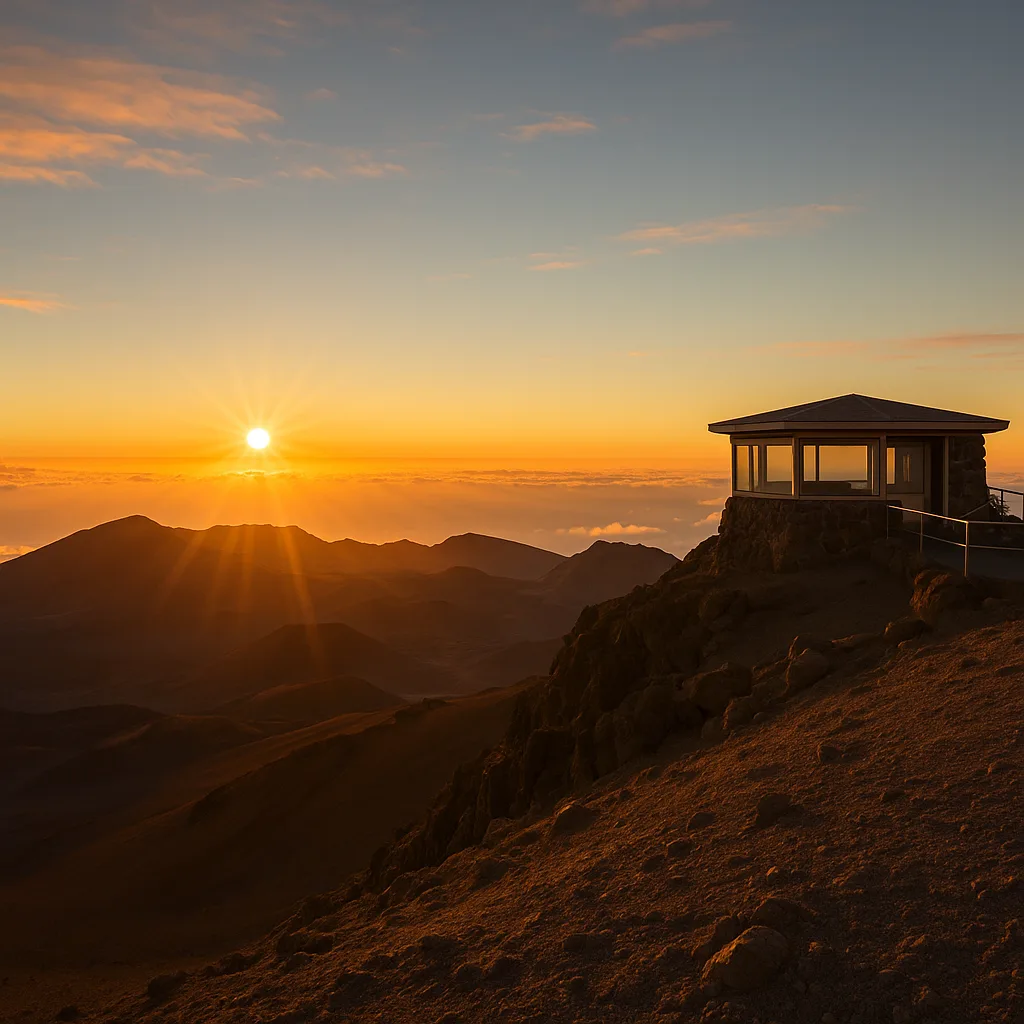
Haleakalā National Park Sunrise
Watching the sun rise above the clouds from the 10,023-foot summit is Maui's signature experience, and it requires a reservation: vehicles entering between 3am and 7am must hold a sunrise ticket from recreation.gov, released 60 days ahead with a smaller batch 2 days (48 hours) before, limited to one per person per three-day period. The $30 park pass is separate and valid for three days, including the Kīpahulu coast. Allow 30 minutes from the entrance to the summit, and expect temperatures near freezing. Sunset and daytime visits need no reservation, and the Keoneheʻeheʻe (Sliding Sands) trail into the crater is spectacular by mid-morning.
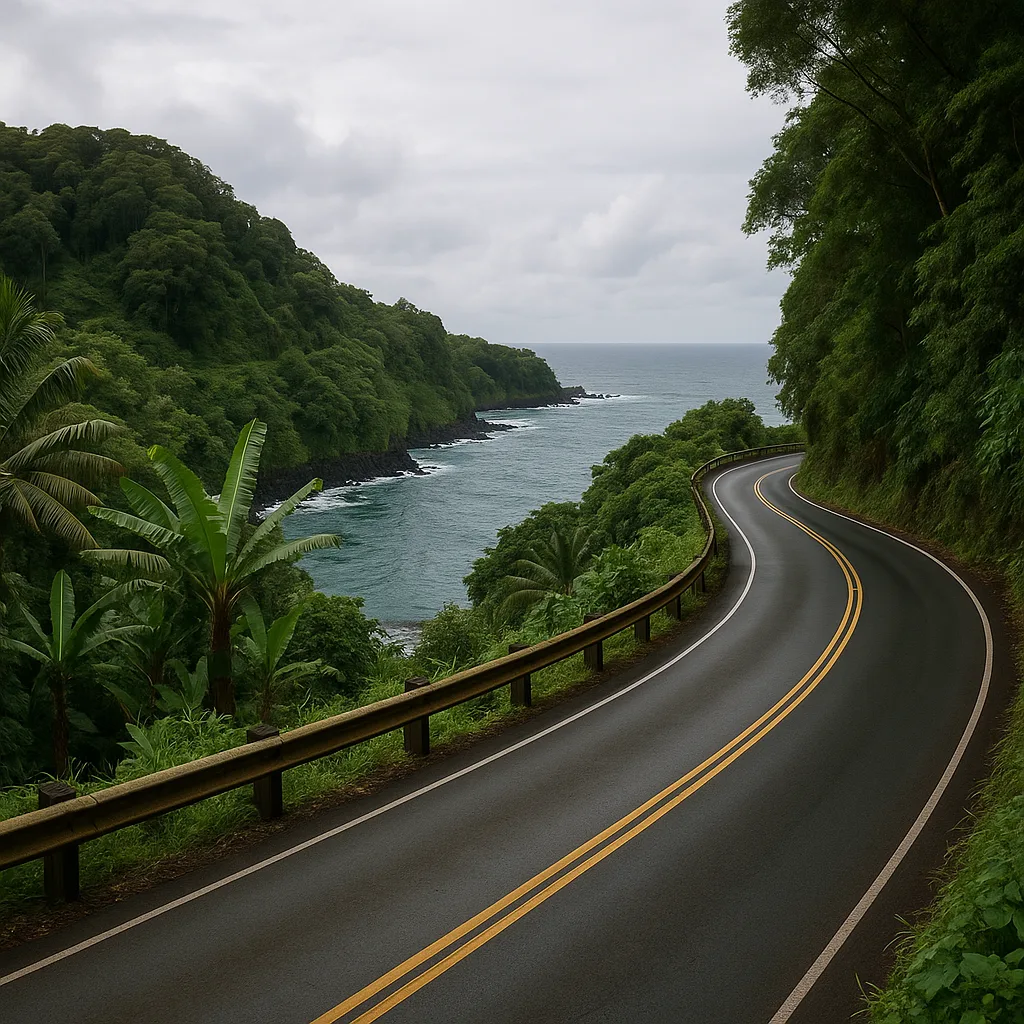
The Road to Hāna
Fifty-two miles, roughly 620 curves and 59 one-lane bridges from Pāʻia to Hāna, past waterfalls, bamboo groves and the taro fields of the Keʻanae Peninsula. Driving time is 2.5 to 3 hours each way before you stop anywhere, so leave Pāʻia by 7am with a full tank. Pull over to let residents pass, park only where it is legal, and skip the private-property trails that social media keeps recommending.
Waiʻānapanapa State Park
The black-sand beach at Paʻiloa, sea caves, a blowhole and a coastal lava trail three miles before Hāna. Out-of-state visitors must book a timed entry window and parking online in advance through Hawaiʻi State Parks (gostateparks.hawaii.gov); there is no walk-up entry, and slots around holidays go quickly, so reserve it the day you set your Hāna date.
Molokini Crater
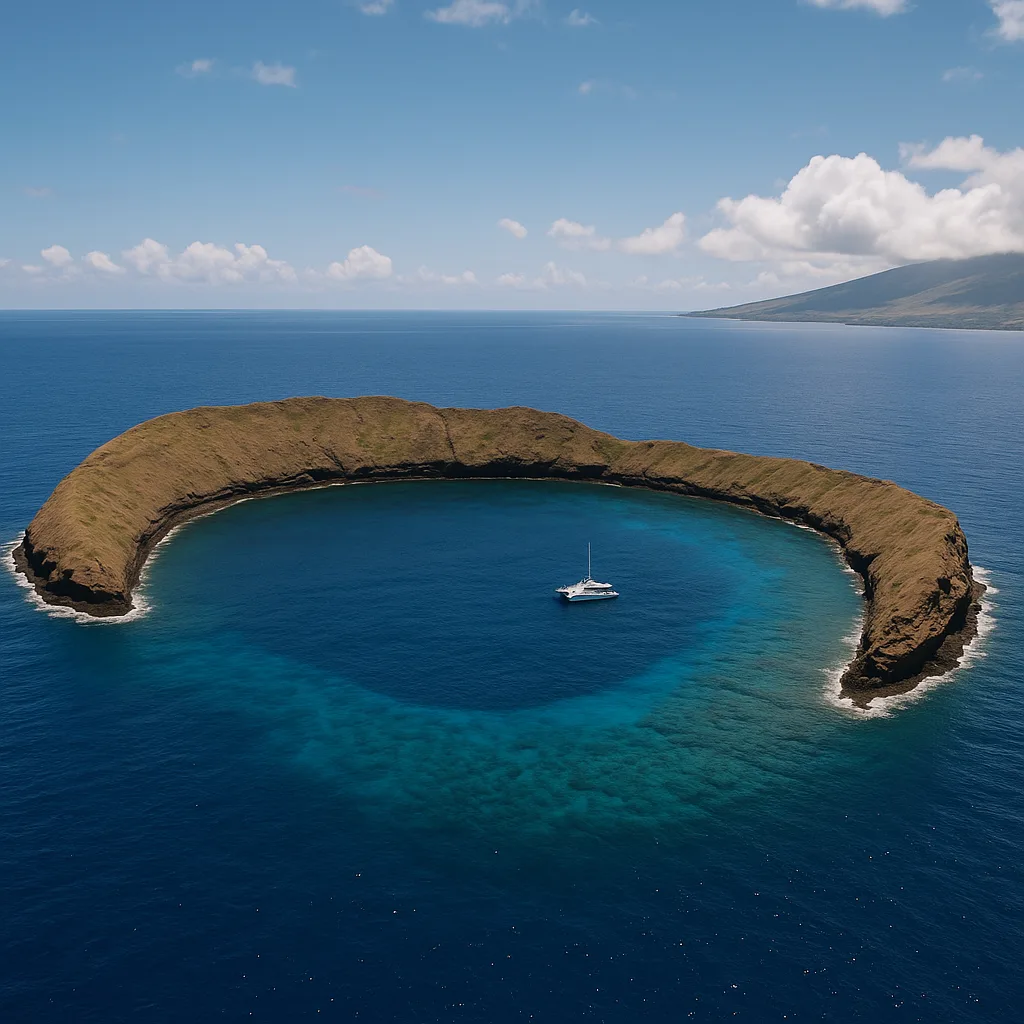
A crescent of volcanic rim three miles off Wailea that shelters a reef with visibility often over 100 feet and no shore runoff. Snorkel boats leave Māʻalaea Harbor and the Kīhei boat ramp from about 7am for five-hour trips at $130–$200 that usually add a second stop at Turtle Town off Maluaka Beach. Take the earliest boat: the water is calmest and the crater emptiest before 10am.
Kīpahulu and the Pīpīwai Trail
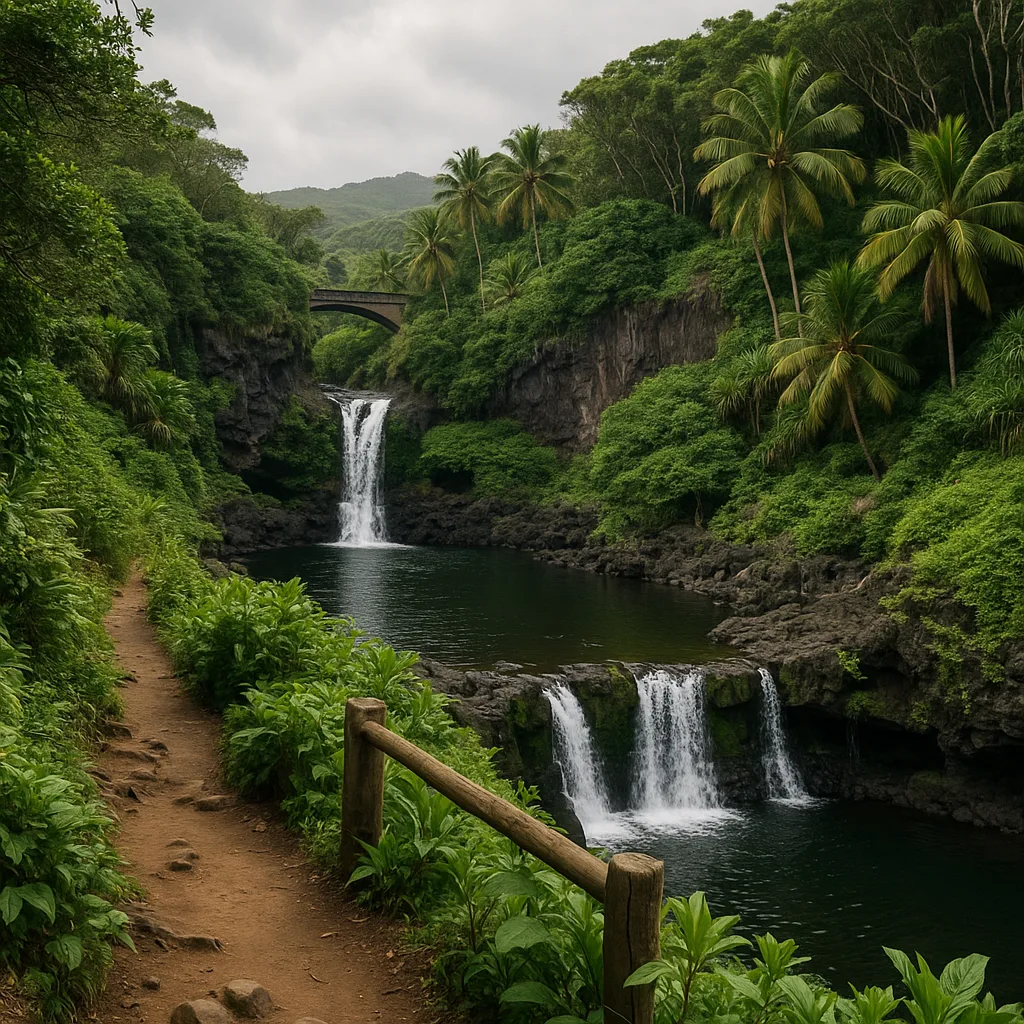
Twelve miles past Hāna, the coastal district of Haleakalā National Park holds the pools of ʻOheʻo Gulch (swimming is often closed after rain) and the 4-mile round-trip Pīpīwai Trail, which climbs through a bamboo forest to the 400-foot Waimoku Falls. It is covered by the same $30 park pass as the summit and is the best reason to keep driving past Hāna town.
ʻĪao Valley State Monument
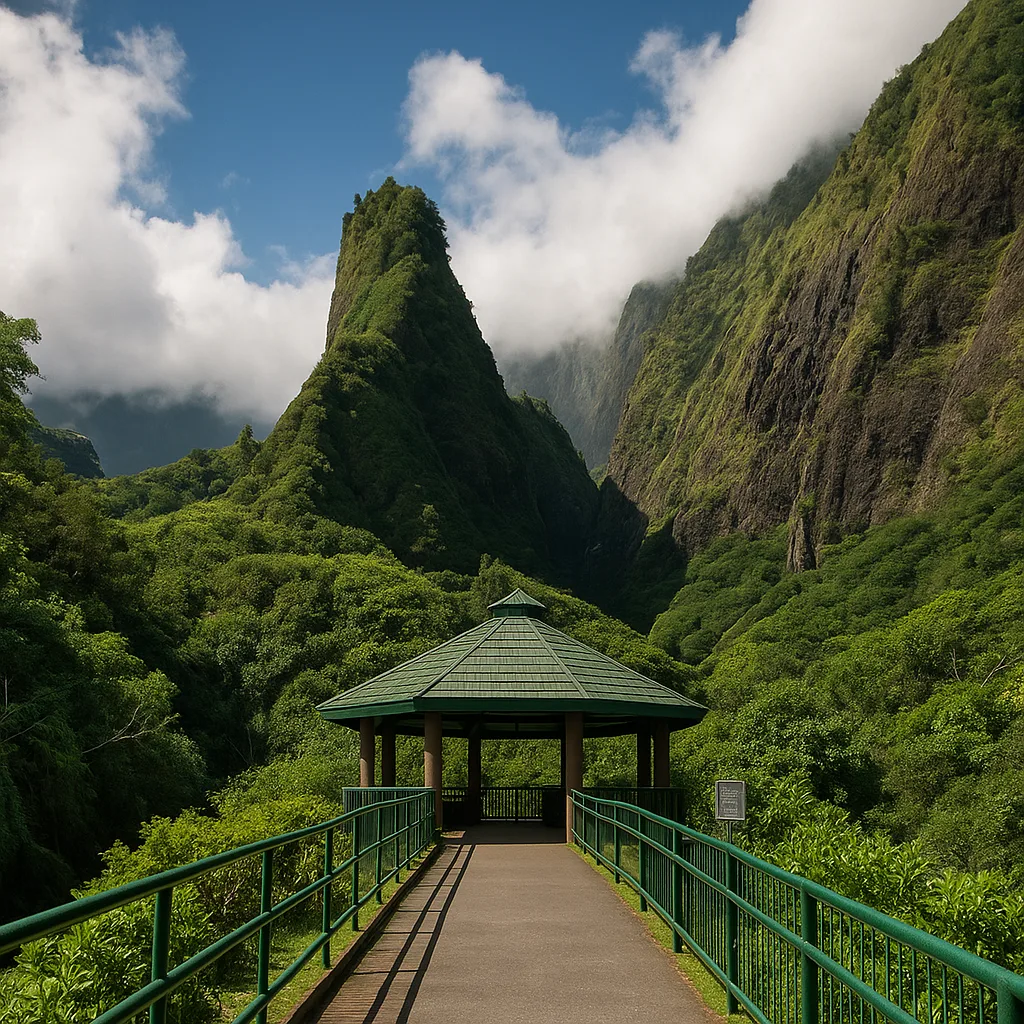
Fifteen minutes from Kahului, a short paved path leads to the view of Kūkaʻemoku, the 1,200-foot ʻĪao Needle, rising from a rainforest valley that was the site of the 1790 Battle of Kepaniwai. Out-of-state visitors need an advance reservation for entry and parking through Hawaiʻi State Parks. Go early or late in the day, before the afternoon clouds settle on the peaks.
Kāʻanapali Beach and Puʻu Kekaʻa
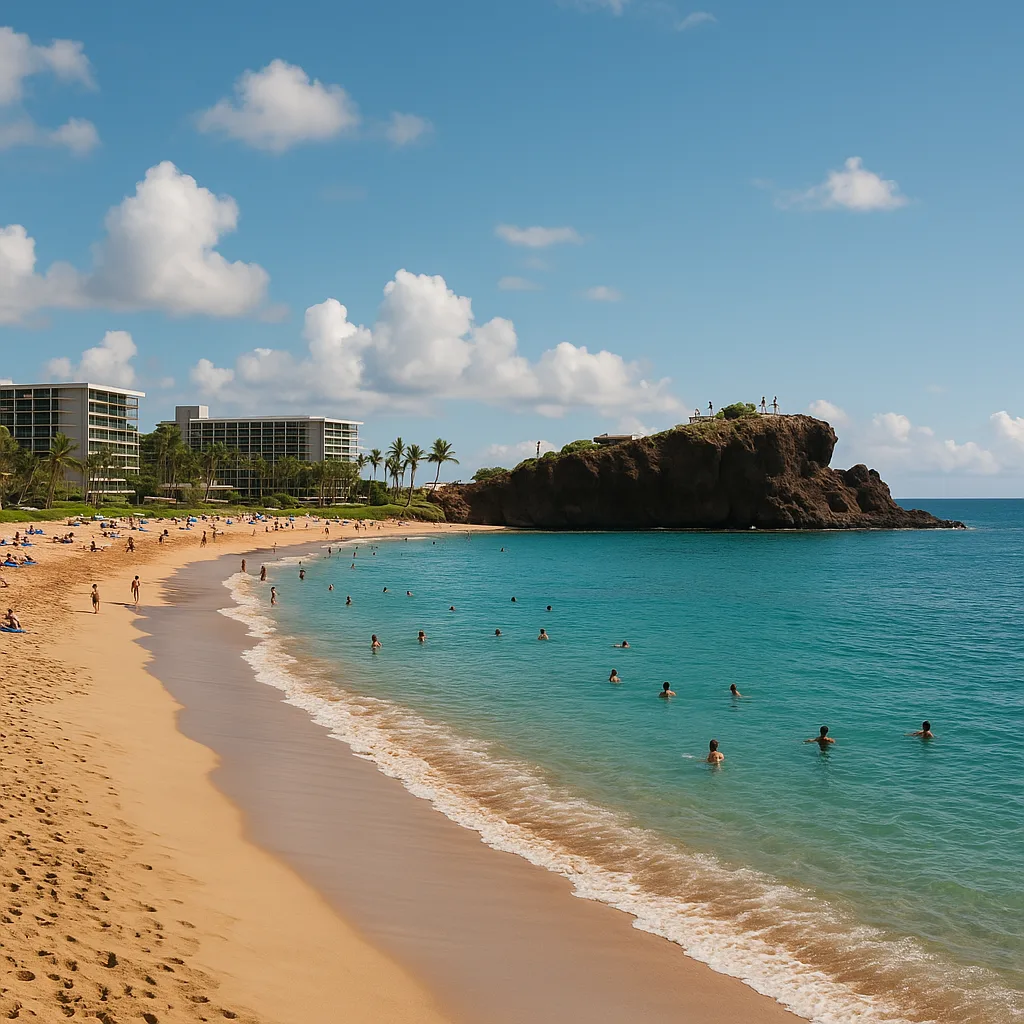
Three miles of golden sand fronting the West Maui resorts, with a paved beach path to Whalers Village. Snorkel at Puʻu Kekaʻa (Black Rock) at the north end in the morning for turtles and reef fish, and return at sunset for the nightly torch-lighting and cliff dive that re-enacts the leap of the souls in Hawaiian tradition.
Whale Watching from Māʻalaea
From December to April, and at its peak from January to March, thousands of humpback whales calve and breed in the shallow channel between Maui, Lānaʻi and Molokaʻi. Two-hour boat trips from Māʻalaea Harbor and Lahaina run $50–$90, but from January you will also see breaches from the shore at Papawai Point and the Wailea Beach Path.
Best Neighborhoods in Maui
Kīhei
Six miles of condos, beach parks and casual restaurants on the dry, sunny south coast. The Kamaʻole I, II and III beaches are lifeguarded and family-friendly, prices are the most reasonable on the island, and Māʻalaea's boats are ten minutes away.
Wailea
The manicured resort district south of Kīhei: five crescent beaches linked by a coastal path, luxury hotels, golf and fine dining, and Makena's Big Beach (Oneloa) a few minutes further on. Quiet by 10pm and the sunniest place to stay on Maui.
Kāʻanapali and Lahaina
The West Maui resort strip, from Kāʻanapali's beach hotels north to Nāpili and Kapalua, reopened to visitors in November 2023 and is fully operating. Lahaina town, four miles south, was largely destroyed by the wildfire of August 8, 2023, which killed 102 people; the historic Front Street district remains a closed rebuilding zone, while the banyan tree survived and is recovering and shops and restaurants in the Lahaina Gateway and Cannery areas have reopened. Visitors are welcome in West Maui; the request from residents is to not enter or photograph the burn zone and to spend with local businesses.
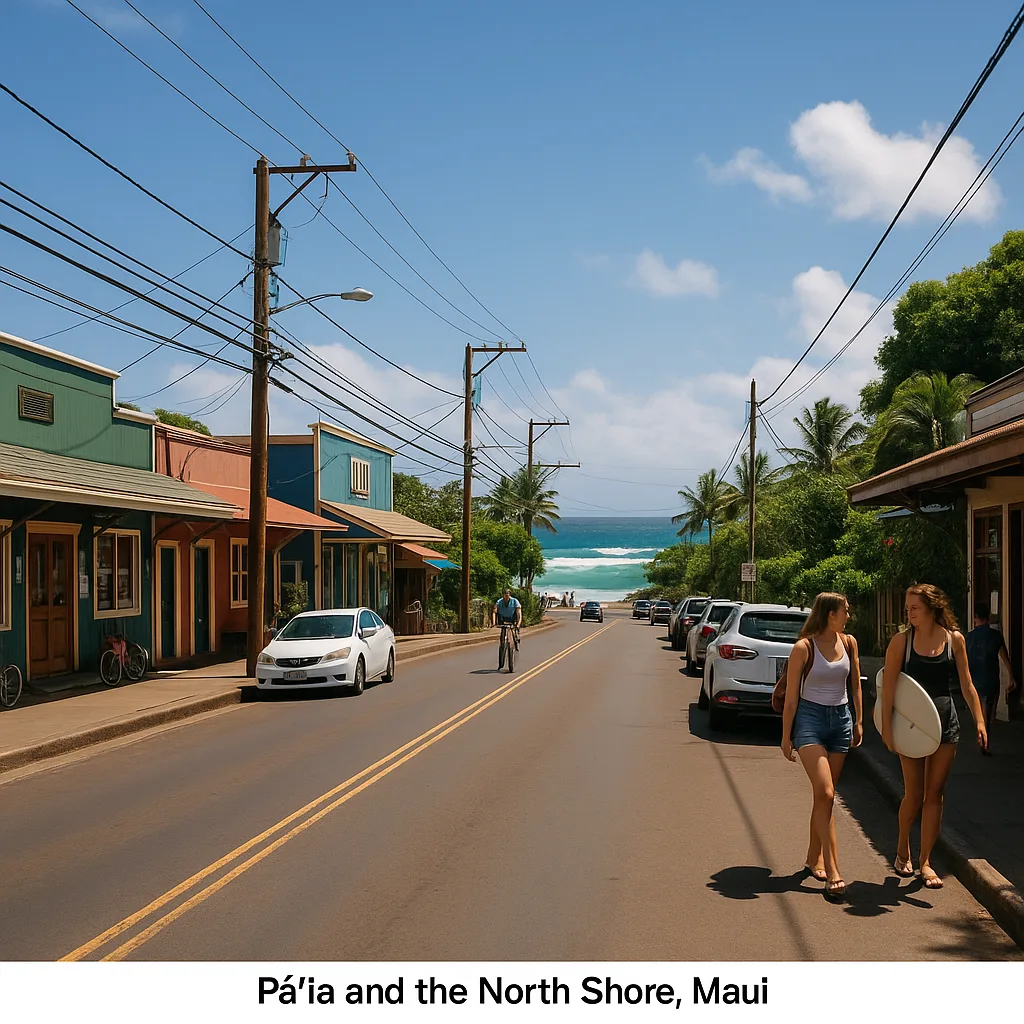
Pāʻia and the North Shore
A former sugar town turned surf village at the start of the Road to Hāna, with wooden storefronts, fish tacos and boutiques. Hoʻokipa Beach Park, two miles east, has the world's best windsurfing and dozens of green sea turtles hauled out on the sand at sunset.
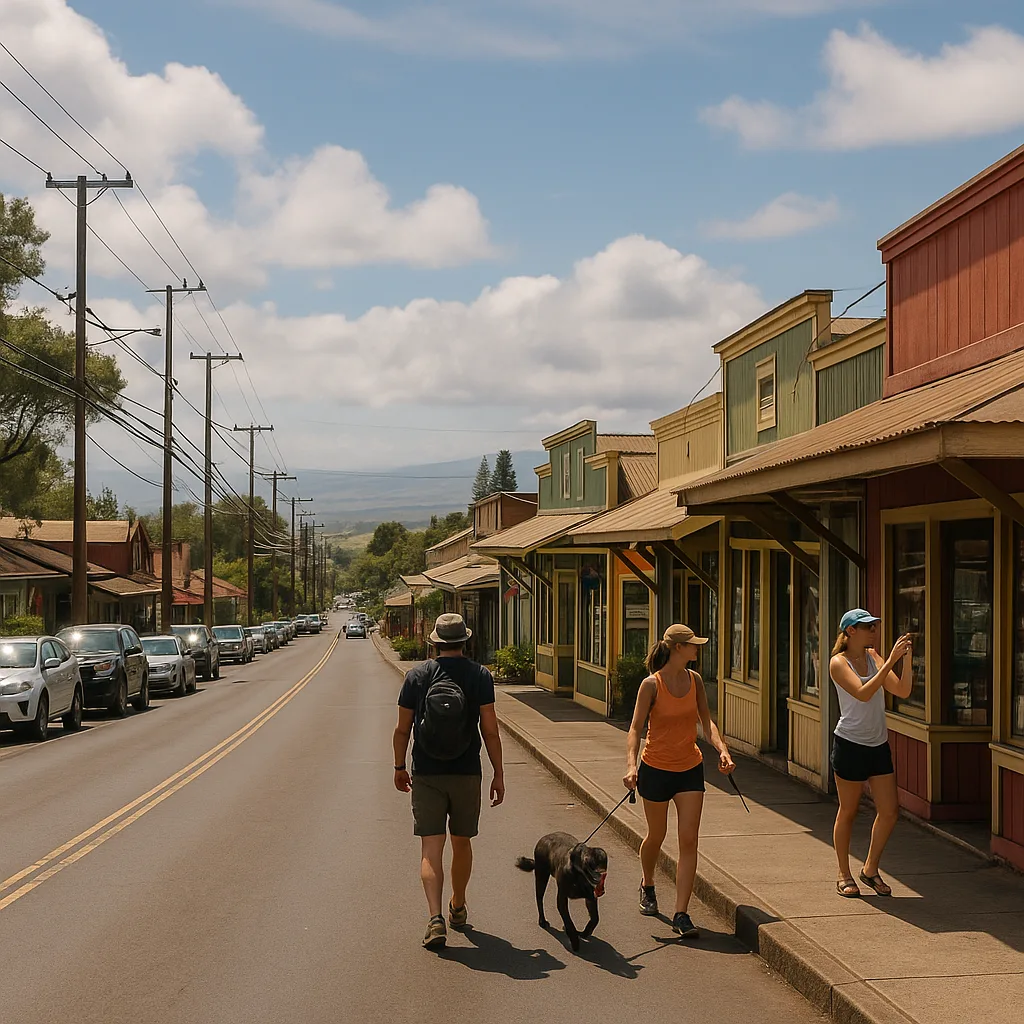
Upcountry: Makawao and Kula
The cool slopes of Haleakalā between 1,500 and 4,000 feet: Makawao's paniolo (cowboy) storefronts and Komoda Store cream puffs, Kula's protea and lavender farms and produce stands, Surfing Goat Dairy, and Maui Wine's tasting room on the ʻUlupalakua ranch. Sweater weather and the closest beds to the summit for a sunrise start.
What to Eat in Maui
- Dinner at Mama's Fish House in Kūʻau (book weeks ahead)
- Warm banana bread from a Road to Hāna stand at Keʻanae
- Cream puffs from Komoda Store and Bakery in Makawao
- Plate lunch at Tin Roof in Kahului
- Poke from the Foodland or Tamura's counter
- Shave ice at Ululani's
- Pie from Leoda's Kitchen in Olowalu
- Maui Gold pineapple from an Upcountry farm stand
Best Time to Visit Maui
The leeward coasts (Kīhei, Wailea, Kāʻanapali) are sunny and warm year-round. April to May and September to October have the lowest prices and the fewest visitors; December to April brings humpback whales, with the peak from January to March, plus the highest hotel rates over the holidays. Summer is family season and the calmest ocean for snorkelling. The Hāna side and Upcountry are wetter in winter, and the Haleakalā summit is cold and windy in every month, so pack a jacket, hat and gloves whenever you go.
Getting to and Around Maui
Kahului Airport (OGG) is 3 miles from Kahului town in the island's central valley, and every resort area is a drive away: Kīhei 25–30 minutes, Wailea 30–35 minutes, Kāʻanapali 50–60 minutes and Kapalua about 65 minutes via the Honoapiʻilani Highway (Route 30), and Hāna 2.5 to 3 hours. A taxi or rideshare runs $50–$70 to Wailea and $90–$120 to Kāʻanapali, shared shuttles about $40–$60 a person, so almost everyone rents a car at the airport: $60–$120 a day, booked early for Christmas and spring break, and a standard car is fine for every road in this guide, including Hāna. The Maui Bus ($2 a ride, $4 day pass) connects Kahului, Kīhei, Wailea, Lahaina and Kāʻanapali roughly hourly but serves none of the parks. Resort parking is $25–$40 a night in Wailea and Kāʻanapali; most Kīhei condos park free. Kāʻanapali to Wailea is 45 minutes to an hour, and the coastal stretch of Route 30 below the pali crawls from 3pm to 6pm. For Haleakalā sunrise, allow 1 hour 45 minutes to 2 hours from Kīhei or Kāʻanapali to the summit, plus time for the entrance queue; from Kula it is about an hour. Kapalua Airport (JHM) handles small interisland flights only.
Where to Stay in Maui
Choose your coast first. Wailea's resorts run $600–$1,200 and up for the sunniest weather, calm beaches and quiet nights; Kīhei, next door, is the best value on the island, with beachfront condos at $200–$400 and older units and hostels at $120–$200, and it is the closest base to the Molokini boats. Kāʻanapali's beach hotels are $450–$900 with resort fees of $35–$50 and Whalers Village on the sand; Nāpili and Kahana condos at $250–$450 sit on smaller bays with excellent shore snorkelling, and Kapalua is the luxury end. Lahaina town itself has almost no visitor lodging since the fire, and West Maui availability is still recovering as condos that housed displaced residents return to the market, so book early. A night in Hāna, whether at the Hāna-Maui Resort from about $700 or a B&B at $200–$350, is the only way to see the east side without the day-trip crowds. Upcountry B&Bs in Kula and Makawao at $180–$300 have cool nights and the shortest drive to the Haleakalā sunrise, and Pāʻia guesthouses at $200–$350 put you at the start of the Hāna road. Maui County has been tightening short-term rental rules, so confirm a listing's permit number before paying.
3 Days in Maui: A Sample Itinerary
Every stop below is one of the places named in this guide. Use it as a starting point, or let the planner build a version around your dates, pace and budget.
Day 1: Haleakalā sunrise and Upcountry
Morning: Haleakalā National Park Sunrise
Leave Kīhei or Kāʻanapali by 3:30am with your recreation.gov sunrise reservation, ID and park pass, reach the Haleakalā National Park summit before first light, and after sunrise walk a mile or two down the Keoneheʻeheʻe (Sliding Sands) trail into the crater while the tour buses head down.
Afternoon: Upcountry: Makawao and Kula
Descend to Kula for a late breakfast and a lavender or protea farm, cream puffs from Komoda Store and Bakery in Makawao (arrive before noon; they sell out), and a tasting at Maui Wine on the ʻUlupalakua ranch.
Evening: Pāʻia and the North Shore
Turtles at Hoʻokipa Beach Park near Pāʻia at sunset, then dinner at Mama's Fish House in Kūʻau if you booked it weeks ago, or fish tacos in Pāʻia if you did not.
Day 2: The Road to Hāna
Morning: The Road to Hāna
Fill up in Pāʻia and be on the road by 7am: Twin Falls for a first swim, the Keʻanae Peninsula for the lava coastline and warm banana bread from the stand, then Waiʻānapanapa State Park for your reserved window at the black-sand beach and sea caves.
Afternoon: Kīpahulu and the Pīpīwai Trail
Lunch in Hāna town, an hour at Hāmoa Beach, then 12 miles on to Kīpahulu for the Pīpīwai Trail through the bamboo forest to Waimoku Falls (allow two hours round trip).
Evening: Hāna
Turn around by 3:30pm and drive the same road back before dark, about three hours, or sleep in Hāna and see the coast empty at dawn. Shave ice from Ululani's when you reach Kahului or Kīhei.
Day 3: Molokini, ʻĪao Valley and Kāʻanapali
Morning: Molokini Crater
The earliest Molokini Crater snorkel boat from Māʻalaea Harbor (check-in around 6:30am), with the Turtle Town stop off Maluaka Beach on the way back and lunch on board.
Afternoon: ʻĪao Valley State Monument
ʻĪao Valley State Monument for your reserved slot and the ʻĪao Needle, a plate lunch from Tin Roof in Kahului, then Route 30 along the pali coast to West Maui with a stop for pie at Leoda's Kitchen in Olowalu.
Evening: Kāʻanapali Beach and Puʻu Kekaʻa
Walk Kāʻanapali Beach to Puʻu Kekaʻa for the sunset torch-lighting and cliff dive, then dinner at one of the reopened West Maui restaurants or a Kāʻanapali luau; in winter, watch for whale spouts from the beach path.
Plan this trip — get a personalized day-by-day Maui itinerary with drive times, restaurant picks and a packing list.
Maui Travel Tips
- Rent a car at Kahului (OGG) — the Maui Bus links the towns for $2 a ride but does not reach Hāna or Haleakalā, and taxis are expensive
- Never drive the Road to Hāna in the dark: leave Pāʻia by 7am, fill the tank, download offline maps (there is little signal) and pull over for residents who are commuting, not sightseeing
- Book three reservations as soon as your dates are set: Haleakalā sunrise on recreation.gov (60 days out), and Waiʻānapanapa and ʻĪao Valley on gostateparks.hawaii.gov
- Respect Lahaina: the burn zone is closed while residents rebuild, so do not enter or photograph it; visit the reopened West Maui businesses and be gentle with people who lost homes
- Reef-safe sunscreen is required by state law; keep 10 feet from turtles, 50 feet from monk seals and 100 yards from whales
Maui FAQ
When is the best time to visit Maui?
The leeward coasts (Kīhei, Wailea, Kāʻanapali) are sunny and warm year-round. April to May and September to October have the lowest prices and the fewest visitors; December to April brings humpback whales, with the peak from January to March, plus the highest hotel rates over the holidays. Summer is family season and the calmest ocean for snorkelling. The Hāna side and Upcountry are wetter in winter, and the Haleakalā summit is cold and windy in every month, so pack a jacket, hat and gloves whenever you go.
How much does a day in Maui cost?
Plan on an average daily budget of $200–$400/day in Maui. The local currency is the US Dollar ($).
How do I get around Maui?
Rent a car at Kahului (OGG) — the Maui Bus links the towns for $2 a ride but does not reach Hāna or Haleakalā, and taxis are expensive. Never drive the Road to Hāna in the dark: leave Pāʻia by 7am, fill the tank, download offline maps (there is little signal) and pull over for residents who are commuting, not sightseeing.
What should I know about safety and etiquette in Maui?
Respect Lahaina: the burn zone is closed while residents rebuild, so do not enter or photograph it; visit the reopened West Maui businesses and be gentle with people who lost homes. Reef-safe sunscreen is required by state law; keep 10 feet from turtles, 50 feet from monk seals and 100 yards from whales.
What are the top things to do in Maui?
Top attractions in Maui include Haleakalā National Park Sunrise, The Road to Hāna, Waiʻānapanapa State Park, Molokini Crater and Kīpahulu and the Pīpīwai Trail. Maui is best for beaches, scenic drives, snorkeling and couples.